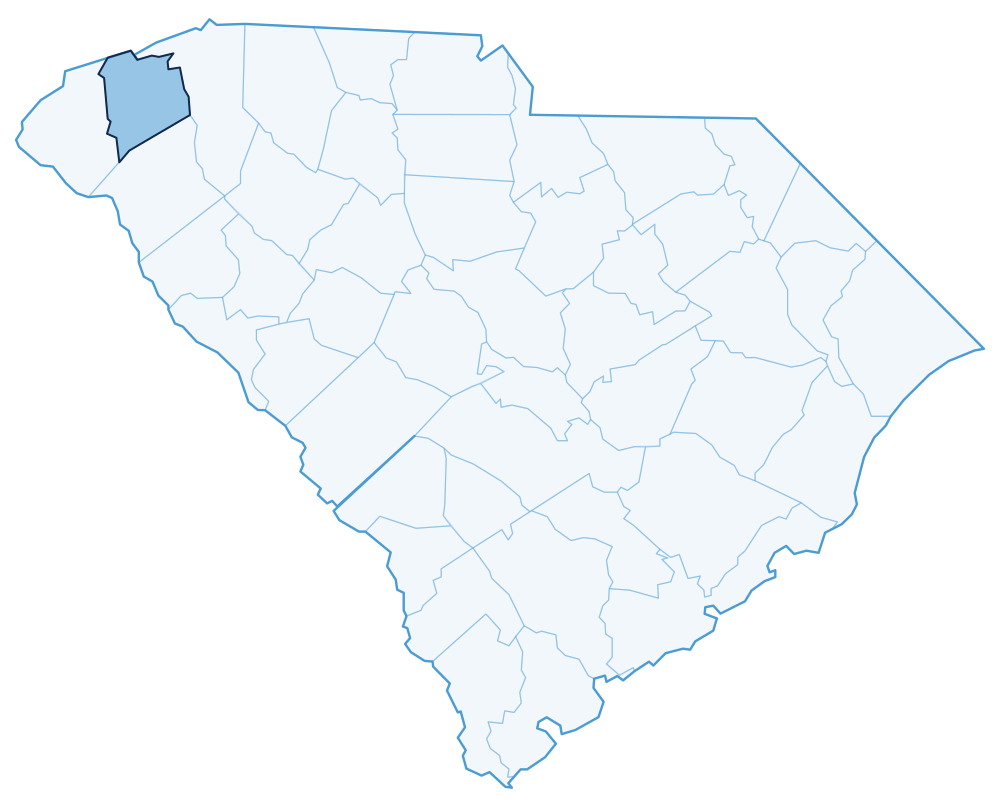
Pickens County
36 places on the trail: 36 highway markers.
People of Pickens County in Carolina Quotes
Colonial (pre-contact to 1763)
- 39-23Cherokee PathThe Cherokee Path was once part of an important trade network that connected the Upper, Middle, and Lower Cherokee towns...
- 39-24Eastatoee ValleyHuman settlement in this valley dates to the Clovis people, present as early as 13,000 years ago. By the early 1700s, th...
- 39-17Fort Prince GeorgeFort Prince George, covered by Lake Keowee since 1968, was built nearby in 1753, near the unofficial boundary between Ch...
- 39-12Hanover HouseHanover House, built 1714-16 in what is now Berkeley County and moved to the Clemson College campus in 1941, is a fine e...
- 39-26Table RockVisible 1.3 mi. NW is the south face of Table Rock, described in the 1820s as S.C.’s “monarch of the mountains.” Part of...
Era of American Revolution (1764-1783)
- 39-20Cherokee Village of EssenecaNative Americans inhabited this site prior to the American Revolution. In 1775 naturalist William Bartram described the ...
- 39-13The Battle of Seneca TownSeneca Town, on the Seneca River E of present-day Seneca, was one of several Cherokee “Lower Towns.” On August 1, 1776, ...
South Carolina in the Early Republic (1784-1815)
- 39-04HopewellHopewell was the family home of General Andrew Pickens, Revolutionary War hero and Indian Commissioner, and his wife, Re...
- 39-05Keowee2 ¼ miles west is the site of Keowee built by John Ewing Colhoun as his upcountry seat in 1792. His sister, Mrs. Andrew ...
- 39-03Old Stone ChurchThis church was built in 1797 for Hopewell (Keowee) Presbyterian congregation by John Rusk on land given by John Miller....
- 39-07Oolenoy Baptist ChurchThis church, named for the Cherokee chief, Woolenoy—the spelling was changed to Oolenoy in 1827—was organized in 1795 by...
- 39-01PickensvilleA town laid out at this site in 1791 called Rockville was officially named Pickensville the next year in honor of Gen. A...
- 39-08PumpkintownThis community, settled before 1800, was named "Pumpkin Town" by an anonymous early traveler awed by the sight of the Oo...
Antebellum (1816-1860)
- 39-32DacusvilleBy the 1820s this section of Pickens District was known as Dacusville. Tradition holds the community was named for Archi...
- 39-02Fort HillHome of/JOHN C. CALHOUN/1825-1850/United States Congressman 1811-1817/Secretary of War 1817-1825/Vice President of the U...
- 39-19Fort Hill Slave QuartersLocated one-eighth mile from the main house, the Fort Hill slave quarters were described in 1849 as being “built of ston...
- 39-18Fort Hill Slave and Convict CemeteryAfrican Americans enslaved at Fort Hill were buried along the hillside below the Calhoun family plot in graves marked on...
- 39-16Hagood MillThis grist mill was rebuilt in 1845 by James Earle Hagood (1826-1904), son of Benjamin Hagood (1788-1865), who had bough...
Reconstruction (1866-1876)
- 39-15Hagood-Mauldin HouseThis house, built ca. 1856, originally sat 14 mi. W in the town of Pickens Court House, then the seat of Pickens Distric...
- 39-30Soapstone Church & SchoolThis Baptist congregation likely dates to the 1870s and was organized by Rev. Joseph McJunkin to serve residents of Libe...
New South (1877-1913)
- 39-11Bowen's MillThis mill was built about 1880 by Colonel Robert E. Bowen (1830-1909), Confederate officer, state representative, state ...
- 39-33Cateechee Mill VillageCateechee Mill Village originally housed employees of Norris Cotton Mills, built on Twelve Mile River in 1895-97 as the ...
- 39-14CentralThe town of Central, chartered in 1875, grew up along what is now Gaines Street. The post office was called Five Mile fr...
- 39-34Central Roller MillsIncorporated in 1898, the Central Roller Mills Co. acquired this site in 1899 and began operations by the following year...
- 39-28Central SchoolThis Classical Revival structure, built 1908-09 by B.E. Grandy, was originally a school for residents of the town of Cen...
- 39-10Clemson UniversityClemson University was founded in 1889 as the Clemson Agricultural College of S.C., with its origins in the Morrill Land...
- 39-35Legare ParkNearby is the site of Legare Park, opened by and named for George S. Legare, a U.S. Congressmen from Charleston and summ...
- 39-36Morgan HouseThis 1-story residence dates to c.1893 and was the family home of Jeptha N. Morgan (1859-1923) and Minnie E. Morgan (186...
- 39-21Old Pickens GaolDesigned by H.D. Breeding, B.E. Grandy built Pickens County gaol (jail) in 1902. For years it housed not only prisoners ...
- 39-22Pickens RailroadThe Easley-Pickens line was chartered in 1890 by the S.C. General Assembly. Construction of the line, which ran from Pic...
World War I and the Interwar Period (1913-1941)
- 39-06Asbury F. Lever (1875-1940)Asbury Francis Lever served in Congress, 1901-1919. On May 8, 1914, the Smith-Lever Act, introduced in the U.S. House of...
- 39-29Central Colored SchoolThis frame building was constructed c.1925 as a school for African American residents of Central. Known as Central Color...
World War II and After (1941-present)
- 39-09Integration With Dignity, 1963Clemson University became the first white college or university in the state to integrate on January 28, 1963. Harvey B....
- 39-31Issaqueena Bombing RangeDuring World War II the U.S. Army Air Force (USAAF) used Lake Issaqueena and surrounding land as a bombing range. The la...
- 39-27Littlejohn's GrillHorace and Gertrude Littlejohn opened Littlejohn’s Grill in a small concrete building in the 1940s. After a c.1950 fire,...