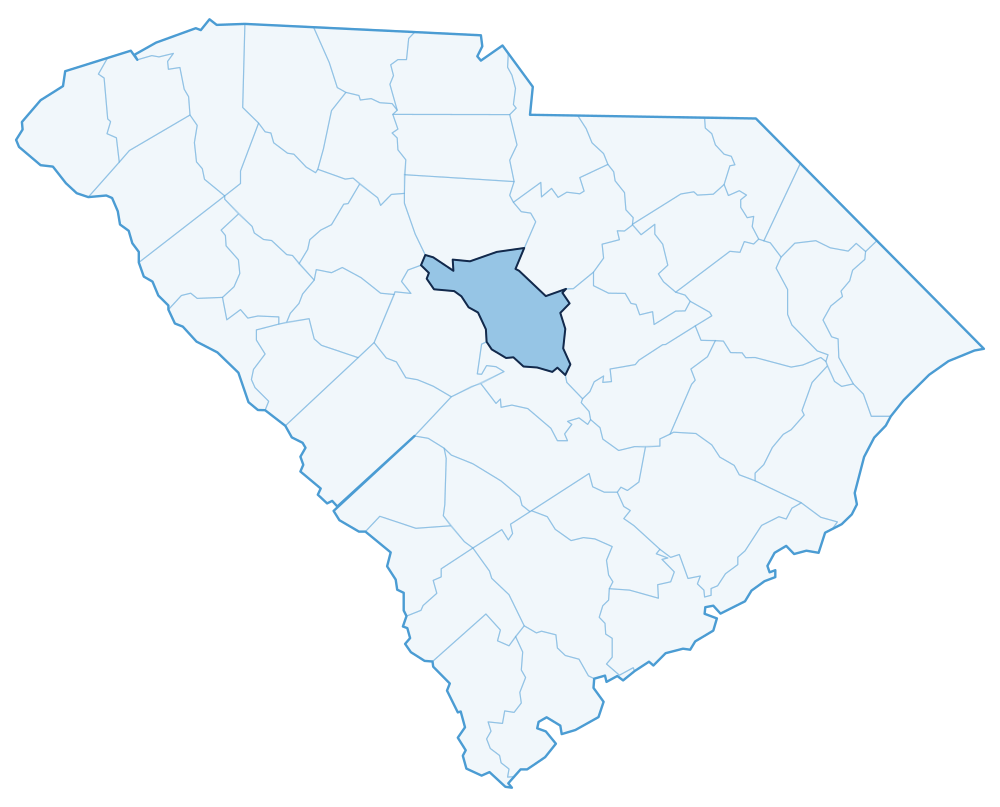
Richland County
230 places on the trail: 229 highway markers, 1 battlefields and state sites.
People of Richland County in Carolina Quotes
Colonial (pre-contact to 1763)
- 40-50Broad RiverEarly boundary between Cherokee and Catawba Indians. Name first applied about 1745. Faust's Ford, 2 mi. above, used in R...
- 40-185Congaree River FerriesJoseph Joyner owned a private ferry on the Congaree River near this site by 1749. John McCord’s private ferry succeeded ...
- 40-42Early Richland County SettlementsFirst settlements made about 1740 on this creek, originally called Raiford's, now Mill Creek. Howell's Ferry across Cong...
- 40-41Friday's Ferry1 mi. west was East Granby Landing of Friday's Ferry (licensed 1754) across Congaree River. Floods destroyed two bridges...
Era of American Revolution (1764-1783)
- 40-105Barnwell StreetThis street is named for General John Barnwell, St. Helena's Parish. He was elected to the Provincial Congress of 1775-7...
- 40-177Bethel Lutheran ChurchThis church, organized in 1762 by German colonists, is one of the first Lutheran congregations in the Dutch Fork region....
- 40-63Bull StreetThis street was named for Brigadier General Stephen Bull (c. 1733-1800). Grandson of Lt. Gov. William Bull I, Stephen wa...
- 40-45Congaree Baptist ChurchA few miles south was the site of original Congaree Baptist Church, organized 1766 with the Rev. Joseph Reese as pastor....
- 40-106Gadsden StreetThis street was named for Charlestonian Christopher Gadsden, member of the 1759 Cherokee expedition, the Commons House o...
- 40-60Gervais StreetNamed for John Lewis Gervais (c.1742-1798) who was educated in Germany, emigrated first to England, arrived in Charlesto...
- 40-58Grave of Joseph ReeseJoseph Reese, pioneer Baptist minister and Revolutionary patriot who died in 1795, is buried 2 mi. SW of here. Born in P...
- 40-80Gregg StreetRichard Winn, for whom this street was first named, was born in Virginia in 1750 and came to South Carolina as a young m...
- 40-91Harden StreetThis street was named for William Harden, a native South Carolinian. In 1776 he was given command of Ft. Lyttleton near ...
- 40-82Henderson StreetThis street is named for Brig. Gen. William Henderson, who was in the Third S. C. Regiment at the fall of Charlestown in...
- 40-30HopkinsLand granted to Jno. Hopkins 1765. Minerva Academy located here 1802-34. Old plantations nearby: CABIN BRANCH (Hopkins, ...
- 40-181Hopkins Family CemeteryThis cemetery was established about 1775 when John Hopkins (1739-1775) was buried here, in what was the garden of his Ba...
- 40-64Huger StreetThis street was named for Brig. Gen. Isaac Huger, who fought in the Cherokee War of 1760 and during the American Revolut...
- 40-76Lincoln StreetGen. Benjamin Lincoln, for whom this street is named, was a division commander in the Saratoga Campaign. In 1778, he bec...
- 40-89Marion StreetBrigadier General Francis Marion was born in South Carolina about 1732 of French Huguenot descent. Marion was a member o...
- 40-104Pendleton StreetThis street is named for Judge Henry Pendleton, one of the Town of Columbia's original commissioners. He was elected ass...
- 40-61Pickens StreetThis street was named for Andrew Pickens (1739-1817). One of three S. C. Partisan Generals in the Revolution, he fought ...
- 40-107Pulaski StreetThis street was named for Casimir Pulaski, a Polish count who came to America in 1777 to aid the Patriot cause. In 1777,...
- 40-59Richardson StreetColumbia's chief business street, Main, was first named Richardson Street, for Richard Richardson (1704-1780). This Virg...
- 40-83Sumter StreetA Virginia native who came to South Carolina ca. 1765, General Thomas Sumter was a leader in civil as well as military a...
- 40-71Washington StreetThis street is named for George Washington, commander of the Continental Army throughout the Revolution, first President...
- 40-43Wateree River FerriesRiver took its name from Wateree Indians, a Siouan tribe which occupied the valley until about 1715. Near this site was ...
- 40-108Wayne StreetThis street was named for Anthony Wayne (1745-1796) of Pennsylvania. Appointed brigadier general in 1777, he fought at B...
- 40-62Williams StreetThis street was named for Otho H. Williams, Brig. Gen. of the Continental Army during the American Revolution. Williams ...
South Carolina in the Early Republic (1784-1815)
- 40-03"Commissioners' Oak"In April 1786, Alexander Gillon, Henry Pendleton, Richard Winn, Richard Hampton, and Thomas Taylor, Commissioners appoin...
- 40-90Assembly StreetIn 1786, when Columbia was established as the state capital, the General Assembly decided that two principal thoroughfar...
- 40-109Bethlehem Church [First Marker]The organization date of this Lutheran church is unknown. In 1788, however, Bethlehem and fourteen other churches signed...
- 40-25Birthplace of General Maxcy GreggMaxcy Gregg, Confederate general and leader in Southern rights movement, was born Aug. 1, 1815 in a house on this site. ...
- 40-66Blanding StreetOriginally named Walnut Street, Blanding Street was by 1869 renamed for Abram Blanding, a Massachusetts native who came ...
- 40-78Blossom StreetThis street is thought to take its name from the cotton blossom. Cotton became an important commercial crop in South Car...
- 40-67College StreetThis street, originally named Medium Street and part of the original 1786 Columbia plan, bisected the area which was to ...
- 40-68Elmwood AvenueThis street, originally named Upper Street, was the northernmost street in the original 1786 Columbia plan. The plan of ...
- 40-17First Baptist ChurchCongregation organized 1809. Original church, built 1811 on Sumter Street corner, was burned Feb. 17, 1865 by Union troo...
- 40-22First Presbyterian ChurchFirst congregation organized in Columbia (1795). The churchyard, allotted as a public burying ground in 1798, was grante...
- 40-40Fisher's Mill on Gill CreekAbout 1800, Col. Thomas Taylor erected the small building, ¼ mile upstream, where cotton goods were woven for his planta...
- 40-103Greene StreetWhy this street was named "Green" on the original 1786 plan of Columbia is not certain; but in keeping with presumed ori...
- 40-29Horrell Hill300 yards north is the site of the Richland County Court House built about 1794; abandoned when county courts were aboli...
- 40-24Horry-Guignard HouseOne of the oldest houses in Columbia; built before 1813, probably by Peter Horry (1747-1815), Colonel in Revolution, Bri...
- 40-79Lady StreetOne of the original streets in the 1786 Columbia plan, Lady Street is thought to have been named for Martha Custis Washi...
- 40-73Laurel StreetThis street probably takes its name from the cherry laurel (laurocerasus caroliniana) and the mountain laurel (Kalmia la...
- 40-74Richland StreetOne of the original streets in the 1786 Columbia plan, Richland Street was probably named after Richland County, which h...
- 40-115Seibels HouseThis house, listed in the National Register of Historic Places and probably built during the last decade of the 18th cen...
- 40-77Senate StreetThe South Carolina General Assembly created Columbia as the state's capital city in 1786, and Senate Street was named fo...
- 40-16Site of Blanding HouseIn this square stood the home of Colonel Abram Blanding (1776-1839) for whom this street was named. He was first princip...
- 40-20Site of Columbia Female AcademyAuthorized by legislature 1792, the Columbia Female Academy was located here from about 1820 to 1883, when this property...
- 40-120Spring HillThis community, named by 1791 for the springs at the foot of the Stone Hill, included Eleazer's Tavern, a post office, s...
- 40-51Taylor CemeteryIn 1786 the State of S. C. bought as part of the site of Columbia the plantation of Colonel Thomas Taylor, Revolutionary...
- 40-81Taylor StreetNamed for the Taylor family, this street is one of the original streets in the 1786 Columbia plan. Thomas Taylor was a m...
- 40-122The State HouseColumbia was founded in 1786, replacing Charleston as the state capital. The first State House here, built in 1789, was ...
- 40-27University of South CarolinaChartered 1801 as the S. C. College, opened January 10, 1805. Entire student body volunteered for Confederate service 18...
- 40-46Woodlands and Millwood1 ½ mi. south was WOODLANDS, built before 1800 by Wade Hampton, I (1752-1835), Colonel in Revolution, Major General in W...
Antebellum (1816-1860)
- 40-44Antebellum PlantationsAmong the early Richland County plantations between the Wateree River and Columbia were: DEER POND and KENSINGTON (Singl...
- 40-123Bethel Methodist ChurchThis church was organized in 1835 in what was then rural Richland District. The first sanctuary here, built soon afterwa...
- 40-110Bethlehem Church [Second Marker]Bethlehem Lutheran Church erected its first known building about 350 feet north of here on a 17-acre tract purchased fro...
- 40-72Calhoun StreetNamed Lumber Street by 1793, this street was renamed Calhoun shortly after 1911 for S. C. statesman John C. Calhoun (178...
- 40-11Cemetery of the Columbia Hebrew Benevolent SocietyIn this cemetery, 2 ½ blocks south on Gadsden Street, are buried many distinguished Jewish citizens, including two mayor...
- 40-37Columbia CanalCompleted 1824. Important link in the system of waterways transporting freight between the up country and Charleston. Su...
- 40-38Congaree River BridgesThis river took its name from the Congaree Indians, a Siouan tribe which occupied the valley until the Yemassee War in 1...
- 40-53Court House SquareRichland County's second court house was built in 1803-04 on the northeast corner of Richardson (Main) and Washington St...
- 40-15Debruhl-Marshall HouseA fine example of the classic style in Southern domestic architecture. Built in 1820, probably after a design of Robert ...
- 40-48Early Columbia RacetrackFrom early days horse racing was a favorite sport in Columbia and many famous horses were bred on neighboring plantation...
- 40-39Early Country HomesIn this malaria-free sandhill section were the antebellum summer homes of many Columbians: QUININE HILL (Dr. J. M. Taylo...
- 40-32Early Summer ResortsLightwood Knot Springs, situated about two miles north, a popular summer resort during the first half of the nineteenth ...
- 40-09Ebenezer Lutheran ChurchFirst Lutheran congregation in Columbia. Church dedicated in this square in 1830 was burned by Union troops in 1865. It ...
- 40-26Entrance to the Columbia Hebrew Benevolent SocietyThe society has been in continuous existence since its organization in 1822. It was chartered 1834. Its charities are ad...
- 40-158Fair-Rutherford HouseThe Fair-Rutherford House, a Greek Revival cottage, stood here from ca. 1850 until it was demolished in 2004. Built for ...
- 40-06Former Site of Columbia Theological SeminaryFounded 1828 by Presbyterian Synod of South Carolina and Georgia. Located here 1831. Moved to Decatur, Georgia 1925. Woo...
- 40-31GadsdenNamed in honor of James Gadsden President of the Louisville, Cincinnati and Charleston Railroad. Station built here 1840...
- 40-135George P. Hoffman HouseThis house was built ca. 1855 for George P. Hoffman (1829-1902), a native of N.C. Hoffman ran a nearby sawmill and becam...
- 40-92Gibbes GreenNamed for Maj. Wade Hampton Gibbes (1837-1903) prominent Columbian who owned much of the land to the east, Gibbes Green ...
- 40-99Gladden Home SiteStates-rights advocate Adley Hogan Gladden, who lived here before the Civil War, served Columbia as postmaster 1841-45 a...
- 40-07Hampton-Preston HouseBuilt about 1818 by Ainsley Hall. Purchased 1823 by Wade Hampton, I. Inherited by his daughter, Mrs. John S. Preston, 18...
- 40-169Hopkins [Marker #2]This rural community grew up around the plantation of John Hopkins (1739-1775). Hopkins, a native of Virginia, settled h...
- 40-151Israelite Sunday SchoolThe Israelite Sunday School, the first Jewish religious school in Columbia, met in a building on this site until 1865. I...
- 40-114James H. AdamsGov. of S.C. 1854-56, lived near here in his home named Live Oak, which burned ca. 1910. Adams is buried nearby at St. J...
- 40-129KensingtonThis plantation on the Wateree River features a remarkable Italianate Revival house built in 1852-54. Designed by Charle...
- 40-166KingvilleKingville, a rural community, was established in 1840 as a station on the Louisville, Cincinnati, and Charleston Railroa...
- 40-14Ladson Presbyterian ChurchCongregation originated in the Sabbath School for colored people organized by the First Presbyterian Church 1838, later ...
- 40-126Mann-Simons CottageThis cottage, built before 1850, with alterations and additions throughout the nineteenth and twentieth centuries, was t...
- 40-206McCord HouseThis Greek Revival house was built in 1849 for David and Louisa McCord by slaves from her plantation, Lang Syne, in Fort...
- 40-167MinervavilleMinervaville, between Cabin Branch and Cedar Creek, was an early 19th-century community. Named after the Minerva Academy...
- 40-52Original Site of Columbia CollegeThis land was purchased in 1854 by the South Carolina Conference of the Methodist Episcopal Church as the site of Columb...
- 40-137Sandfield Baptist ChurchTwenty-Five Mile Creek Church, a Primitive Baptist congregation, was organized in this area before 1772. It was renamed ...
- 40-138Sandy Level Baptist ChurchTwenty-Five Mile Creek Church, a Primitive Baptist congregation, was organized in this area before 1772. The mother chur...
- 40-08Site of Columbia Male AcademyTrustees appointed by legislature 1792 were incorporated 1795 and served as trustees for male and female academies. Scho...
- 40-33South Carolina Female Collegiate InstituteAt Barhamville, about ½ mi. west of this point, a famous girls' school, founded by Dr. Elias Marks (1790-1886), was loca...
- 40-28South Carolina State HospitalInstitution authorized 1821 by General Assembly, mainly through the work of two members, Samuel Farrow and William Craft...
- 40-34St. Peter's Church and Ursuline ConventFirst church built 1824; present church 1906. In the churchyard is buried John R. Niernsee (1823-85), Major C. S. A.; ar...
- 40-121St. Phillip A.M.E. ChurchThis church, organized by 1835, met first in a brush arbor 1 ½ mi. N., then constructed a sanctuary on this site shortly...
- 40-179State FairgroundsThe S.C. State Fair was founded in 1856 by the State Agricultural Society. The fair was held at the fairgrounds on Elmwo...
Civil War (1861-1865)
- 40-04"Chesnut Cottage"Temporary wartime home of Gen. and Mrs. James Chesnut. Here they entertained Jefferson Davis, president, C. S. A., and h...
- 40-188Burning of ColumbiaDue to Columbia’s strategic value, capture of the city was an objective of the Union Army during the Carolinas Campaign ...
- 40-116Camp JohnsonThis Confederate camp of instruction was once located about 1 mi. NW at Lightwood Knot Springs, site of a popular resort...
- 40-124Confederate Printing PlantFrom April 1864 to February 1865 Confederate bonds and currency were printed and processed in this building, constructed...
- 40-12Governor's MansionArsenal Academy, converted from a state arsenal, occupied this square from 1842 to 1865 when Union troops burned all the...
- 40-49Sherman's HeadquartersDuring the Federal occupation of Columbia February 17-19, 1865 commanding General William T. Sherman had his headquarter...
- 40-18Site of Gibbes HouseOn this corner stood the home of Dr. Robert W. Gibbes (1809-66) distinguished physician, scientist, historian, editor, a...
- 40-13Site of Palmetto Iron WorksOn the SW corner of this square was located the Palmetto Armory, later called Palmetto Iron Works, originally built for ...
- 40-35Site of Wayside HospitalEstablished March 10, 1862 by a group of Columbia women to care for sick and wounded Confederate soldiers. Supported by ...
- 40-127Skirmish at Killian's MillOn February 18, 1865, the day after Federals under Gen. W.T. Sherman occupied Columbia, Gen. Frank Blair ordered units o...
- 40-131State Dispensary WarehouseThis building, built in 1863-64 and burned by Federal troops in 1865, was rebuilt in 1872 as a cotton batting factory an...
- 40-10State FairgroundsThis square is part of the tract where state fairs were held 1856-61, 1869-1903. The buildings, used 1861-65 for Confede...
Reconstruction (1866-1876)
- 40-147Benedict CollegeBenedict College, founded in 1870 by the American Baptist Home Mission Society to educate freedmen and their descendants...
- 40-150Bethel A.M.E. ChurchThis church, founded in 1866, was one of the first separate African-American congregations established in Columbia after...
- 40-118Calvary Baptist Church, 1865-1945Site of an African-American church organized in 1865 with Samuel Johnson as its first pastor. It met under a brush arbor...
- 40-100City HallCompleted in 1874, this superb example of renaissance revival architecture was built of local and Fairfield County grani...
- 40-112Early Howard School SiteOn this site stood Howard School, a public school for blacks established after the Civil War. By 1869 there was a two-st...
- 20-16Fairfield InstituteThis grade school and normal institute for blacks was founded in 1869 during Reconstruction by the Northern Presbyterian...
- 40-168Harriet Barber HouseIn 1872 Samuel Barber (d. 1891) and his wife Harriet (d. 1899), both former slaves, bought 42 1/2 acres here from the S....
- 40-111Howard School SiteEstablished after the Civil War, this public school for blacks was located at the NW corner of Hampton & Lincoln streets...
- 40-208Minton Family HomeThis Italianate-style home was built c. 1872 for Theophilus and Virginia McKee Minton. The Mintons were prominent Africa...
- 40-197New Light Beulah Baptist ChurchNew Light Beulah Baptist Church was organized in 1867 when 565 African American members withdrew from Beulah Baptist Chu...
- 40-232Palmetto Engine HouseThis 2-story brick building dates to 1867 and originally housed the Palmetto Fire Engine Co., a volunteer firefighting a...
- 40-228Pine Grove A.M.E. ChurchThis African Methodist Episcopal (A.M.E.) congregation organized in 1868. Tradition holds that members first met under a...
- 40-133Randolph CemeteryRandolph Cemetery, founded in 1871, was one of the first black cemeteries in Columbia. It was named for Benjamin Frankli...
- 40-19Site of Carolina HallAfter Red Shirt campaign of 1876 Wade Hampton was inaugurated governor of South Carolina at Carolina Hall which stood in...
- 40-02Site of Parade GroundDuring Federal military occupation of South Carolina 1865-1877, this square was part of the parade ground used by United...
- 40-230St. James A.M.E. ChurchThis African Methodist Episcopal (A.M.E.) church organized in 1871. In that year, five church trustees acquired this lot...
- 40-219St. Luke's Episcopal ChurchSt. Luke’s was the first Episcopal congregation in Columbia established for African Americans. Members began worshipping...
- 40-95St. Paul ChurchOne of the first black churches after the Civil War, St. Paul AME began as Oak Grove African Methodist Episcopal Church....
- 40-200Sylan BuildingThe Sylvan Building, built c. 1871, is attributed to prominent Philadelphia architect Samuel Sloan. Distinguished by its...
- 40-222U.S.C. During ReconstructionPeople of African descent have been integral to the history of U.S.C. In the early days of the university enslaved peopl...
- 40-21Washington Street Methodist ChurchA church was built here between 1803 and 1805; another church, erected 1832, was burned by Union troops in 1865 and reco...
- 40-146Wesley Methodist ChurchWesley Methodist Church is the oldest African American Methodist congregation in Columbia. It was founded in 1869 by Rev...
- 40-69Wilson HouseBuilt by 1872, this house was the boyhood home of Woodrow Wilson (1856-1924), twenty-eighth President of the United Stat...
- 40-186Zion Baptist ChurchZion Baptist Church first organized in 1865 and met in a humble dwelling on Gadsden St. The congregation moved to this s...
- 40-178Zion Chapel Baptist Church No. 1This African-American church was organized ca. 1865 when four men left Sandy Level Baptist Church, founded before the Re...
New South (1877-1913)
- 40-2121900 Block of Henderson StreetThis block features a dense collection of late 19th and early 20th c. houses historically associated with and home to Af...
- 40-183A.S. Salley HouseAlexander S. Salley (1871-1961), the historian described as “a walking encyclopedia” of S.C. history, lived here from 19...
- 40-152Allen UniversityAllen University, chartered in 1880, was founded by the African Methodist Episcopal (A.M.E.) Church. It had its origin i...
- 40-156Alston HouseThis Greek Revival cottage, built ca. 1872, was the residence and business of Caroline Alston, a black businesswoman who...
- 40-191Beth Shalom CemeteryIn 1883 members of Columbia’s Jewish community founded the Hebrew Cemetery Society of Columbia as an alternative to the ...
- 40-162Bethel Baptist ChurchBethel Baptist Church was founded in 1884 by black members of nearby Sandy Level Baptist Church seeking to organize a se...
- 40-149Blossom Street SchoolBlossom Street School, at the corner of what was then Blossom & Gates (now Park) Streets, was built in 1898 as the first...
- 40-224Brown Chapel A.M.E. ChurchTradition holds that early members of Brown Chapel African Methodist Episcopal (A.M.E.) Church worshipped under a brush ...
- 40-88Church of the Good ShepherdBeginning in 1883 with services held in nearby private homes by Trinity Church, this Episcopal church then constructed a...
- 40-189DuPre BuildingThe DuPre Building was built in 1919 and was designed by prominent S.C. architect James B. Urquhart. It served as showro...
- 40-170EastoverEastover, so named for being “east and over” from Columbia, was a small rural community of the mid-19th century that gre...
- 40-223Hettie Anderson HomesiteHarriette “Hettie” Eugenia Anderson, acclaimed African American art model of the Gilded Age, grew up in a house at this ...
- 40-23Last Home of Wade HamptonWade Hampton, III, born March 28, 1818, was commander of Hampton Legion, 1861, with rank of Colonel; Lieutenant General,...
- 40-220Lincoln ParkFrom 1901 to 1905, this was a segregated park for African Americans, opened by the Columbia Electric Street Railway Comp...
- 40-201Little Zion Baptist ChurchThe congregation at Little Zion dates to c. 1832, when enslaved individuals worshipped in white-controlled churches. Aft...
- 40-174Maxcy Gregg ParkThis city park, established in 1911, was named for Confederate general Maxcy Gregg (1814-1862). It was one of several pa...
- 40-199Olympia CemeteryThe Olympia Cemetery was established c. 1904 and served the families of mill workers from Capital City, Richland, Granby...
- 40-215Olympia Mill SchoolOne of approx. 300 homes built 1900-01 for workers at nearby Olympbia Cotton Mill, this 6-room duplex later housed the O...
- 40-05Original Site of Winthrop CollegeIn 1886, chiefly through the efforts of D. B. Johnson, first superintendent of Columbia public schools, Winthrop Trainin...
- 40-87Richland Presbyterian ChurchThis church building was dedicated in May 1884 by Dr. John L. Girardeau. The congregation of 11 members, including 2 eld...
- 40-125Seaboard Air Line Passenger DepotThis depot, built by the Seaboard Air Line Railway in 1904, was the third passenger depot built in Columbia, following t...
- 40-102ShandonIn 1890 the Columbia Land and Investment Co. purchased farm land in this area for development, laying out streets and si...
- 40-159Sidney Park C.M.E. ChurchSidney Park C.M.E. Church was founded in 1886 and has been at this site since 1889. It grew out of a dispute among membe...
- 40-209St. Timothy's Episcopal ChurchSt. Timothy’s Episcopal Church dates to 1892 and is the third oldest Episcopal parish in Columbia. It began as a mission...
- 40-01Trinity Episcopal ChurchParish organized 1812. Original church dedicated 1814; present church dedicated 1846. In the churchyard lie buried the t...
- 40-134Visanska-Starks HouseThis house, built after 1900, was originally a two-story frame residence with a projecting bay and wraparound porch; a f...
World War I and the Interwar Period (1913-1941)
- 40-5530th Inf DivisionAfter a brilliant combat record in World War I and 14 years of dedicated National Guard service, the "Old Hickory" Divis...
- 40-8581st Inf DivisionThe 81st was organized at Camp Jackson, Aug. 25, 1917, where the training area included Wildcat Creek. Soon dubbed the W...
- 40-221Allen Benedict CourtIn 1940, a segregated public housing complex for African Americans opened at this site. Named after nearby Allen Univers...
- 40-193Beth Shalow SynagogueIn 1905 disagreements over religious practices divided members of Columbia’s Tree of Life Synagogue. Jews embracing Orth...
- 40-210Blythewood SchoolThe first school here built c.1890 was a one-room frame building. In 1921 a two-story brick schoolhouse and auditorium r...
- 40-164Booker T. Washington SchoolThe two-story main building at Booker T. Washington School, built in 1916, stood here until 1975. At first an elementary...
- 40-132Cain-Matthews-Tompkins HouseThis house, built ca. 1910 for Columbia businessman John Jefferson Cain (1869-1929), was designed by William Augustus Ed...
- 40-47Camp JacksonNamed in honor of Gen. Andrew Jackson. This cantonment site 1 ½ mi. north was approved by the War Dept. June 2, 1917. Ma...
- 40-86Columbia Bible CollegeColumbia Bible School classes began in 1923 in the towered building which once stood on this site (originally as Columbi...
- 40-139Columbia Bible College, 1937-1960In 1937 Columbia Bible College (now Columbia International University) acquired the Ainsley Hall House, designed by Robe...
- 40-225Columbia Truck TerminalThis was the site of the Columbia Truck Terminal, a truck stop opened in 1940 by M.D. Hicklin, W.T. Cassels Sr., and C.L...
- 40-173Curtiss-Wright HangarThis hangar, built in 1929 by the Curtiss-Wright Flying Service, was the first building at Owens Field, a municipal airp...
- 40-198Dentsville SchoolDentsville Consolidated School opened at this site in 1926. The brick building was the first school in the newly created...
- 40-205Gonzales GardensOpened in September 1940, Gonzales Gardens was named for N.G., Ambrose, and William Gonzales, founders of The State news...
- 40-130Jefferson HotelThe Jefferson Hotel, designed and built by Columbia entrepreneur and contractor John Jefferson Cain (1869-1929), stood h...
- 40-136Killian SchoolThis one-room primary school, built about 1925, stood about 1 mi. E, at the intersection of Killian and Longtown Roads, ...
- 40-218Manigault's Funeral HomeThis was the original site of Manigault-Gaten-Williams Funeral Home, est. 1923 and later run by the family of co-founder...
- 40-155Matilda A. Evans HouseDr. Matilda A. Evans (1872-1935), an African American physician, as well as a public health and civil rights advocate, l...
- 40-163Monteith SchoolThis African-American school, built nearby before 1900, was originally New Hope School, a white school affiliated with U...
- 40-161Nathaniel J. Frederick HouseNathaniel J. Frederick (1877-1938), educator, lawyer, newspaper editor, and civil rights activist, lived here from 1904 ...
- 40-153North Carolina Mutual BuildingThe North Carolina Mutual Building was built in 1909 by the N.C. Mutual and Provident Association, a black-owned life in...
- 40-94Paul R. RedfernBorn in 1902, Paul Redfern at an early age showed a marked mechanical aptitude and excitement for aviation. Shortly afte...
- 40-172Pine Grove Rosenwald SchoolThis school, built in 1923 at a cost of $2,500, is one of 500 African-American schools in S.C. funded in part by the Jul...
- 40-128R.L. Bryan Co. WarehouseThis warehouse was built in 1913 as the schoolbook depository for the R.L. Bryan Company. The company, founded in 1844 b...
- 40-176Redfern FieldThis is the site of Redfern Field, established in 1923 as the first commercial airfield in Columbia. Paul Rinaldo Redfer...
- 40-160Richard Samuel Roberts HouseRichard Samuel Roberts (1880-1936), a photographer who documented individuals, families, and institutions in Columbia’s ...
- 40-113Richlex School SiteJulius Rosenwald, Chicago philanthropist and president of Sears, Roebuck & Co., (1910-1925), helped fund this black scho...
- 40-234Ridgewood Baptist ChurchRidgewood Baptist Church organized in 1925. Members initially worshipped in the yard of Robert and Lillie Knightner’s fa...
- 40-171Robert Weston Mance HouseThe Robert Weston Mance House, built in 1903, stood here at the corner of Pine and Hampton Streets until 2008. A two-sto...
- 40-187S.C. Confederate Soldiers' HomeThe Confederate Infirmary opened here in 1909. S.C. was the last southern state to create a residence for indigent Civil...
- 40-203S.C. Education AssociationFormally organized in 1881 as the S.C. Association of Teachers, the S.C. Education Association established its first per...
- 40-194Shandon Presbyterian ChurchShandon Presbyterian Church began as Shandon Mission, which first met in Oct. 1913. By 1915, the Church had acquired tit...
- 40-97Site of Columbia High SchoolDescribed as "Collegiate Italian Renaissance" in style, this school was designed by J. Carroll Johnson, of Urquhart and ...
- 40-231South Carolina SanatoriumAt this site in 1915 the state Board of Health opened a tuberculosis hospital known as the South Carolina Sanatorium. Th...
- 40-101The Big AppleOriginally built 1907-1910 as the House of Peace Synagogue and located 100 yards south, this building was sold in 1936 a...
- 40-202Town TheatreThe Town Theatre was founded in 1919 by public-spirited Columbians who yearned for a community theatre. Daniel A. Reed, ...
- 40-180Victory Savings BankVictory Savings Bank, founded in 1921, was the first, and for many years the only, black-owned bank in S.C. It was chart...
- 40-157WaverlyWaverly has been one of Columbia’s most significant black communities since the 1930s. The city’s first residential subu...
- 40-217Woman's Club of ColumbiaThe Woman’s Club of Columbia was founded in 1925 as a civic and social club for local women. In 1941, their first perman...
World War II and After (1941-present)
- 40-54100th Inf DivisionAt this site on 15 November 1942, Maj. Gen. W. A. Burress received the 100th Infantry Division colors, marking the offic...
- 40-00102nd CavalryFormed 1890 as the Essex Troop of Lt. Cavalry; mustered into the N.J. National Guard in 1893. After World War I service,...
- 40-57106th Inf DivisionNear this site on 15 March 1943 the 106th Infantry Division was officially activated and became known as the "Golden Lio...
- 40-11726th Inf DivisionThe "Yankee" Division, which saw extensive combat in World War I, was mobilized for active duty in World War II in Janua...
- 40-11931st Inf DivisionThe "Dixie" Division, created in 1917, spent most of World War II as a training division, with some units training at Ft...
- 40-964th Infantry DivisionOrganized in 1917, the 4th Infantry Division was stationed in this area at Ft. Jackson during World War II and received ...
- 40-9377th Inf DivisionThe "Statue of Liberty Division" was reviewed by England's Winston Churchill and President Franklin D. Roosevelt after i...
- 40-5687th Inf DivisionActivated at Camp McCain, Miss. in 1942, the "Golden Acorn" Division trained at this site in 1944. The division distingu...
- 40-988th Infantry DivisionActivated in 1918 and inspected by Gen. Dwight D. Eisenhower and Lt. Gen. George S. Patton during World War II, the 8th ...
- 40-207Benjamin Mack HouseEducator and civil rights leader Benjamin Mack (1916-1970) lived in this house from the late 1950s until his death in 19...
- 40-182Bible Way Church of Atlas RoadThis church, founded in 1963, was originally about 3 mi. NW on Bluff Road. It was organized by Elizabeth Simmons (1900-1...
- 40-195Canal Dime Savings BankThis three-story building was designed by the noted Columbia architectural firm of W.B. Smith Whaley and Co. Completed i...
- 40-140Carver TheatreCarver Theatre, built about 1941, was one of Columbia’s two exclusively African-American theatres during the segregation...
- 40-196Columbia Civil Rights Sit-InsOn March 15, 1960 five African American students from Benedict College – Charles Barr, David Carter, Richard Counts, Mil...
- 40-213Columbia Hospital "Negro Unit"Columbia Hospital, est. 1892, opened a segregated wing for African Americans in 1934 at its Hampton St. location. In 194...
- 40-233Congaree Action NowOn Sept. 20, 1975, more than 700 people gathered here for Congaree Action Now, a major turning point in the campaign to ...
- 40-211Cyril O. Spann Medical OfficeFrom 1963 to 1979, this was the office of Dr. Cyril O. Spann (1916-1979), one of the first fully trained African America...
- 40-214Edwards v. S.C.On March 2, 1961, over 200 African American college and high school students marched 6 blocks from Zion Baptist Church t...
- 40-154Good Samaritan-Waverly HospitalGood Samaritan-Waverly Hospital, created in 1938 by the merger of two older hospitals, served the black community of Col...
- 40-229Harold Boulware HouseThis was the adult home of pioneering S.C. civil rights attorney Harold R. Boulware (1913-1982). Born and raised in Irmo...
- 40-184Harriett Cornwell Tourist HomeThis home’s first owner was John R. Cornwell, an African American business man and civic leader who owned a successful b...
- 40-143Heidt-Russell HouseThis house, with Greek Revival and Italianate architectural influences, was built about 1879 by William J. Heidt, builde...
- 40-175I. DeQuincy Newman HouseIsaiah DeQuincey Newman (1911-1985), Methodist minister, civil rights leader, and state senator, lived here from 1960 un...
- 40-142James M. Hinton HouseThis is the site of the home of James Miles Hinton (1891-1970), businessman, civil rights pioneer, and minister. Hinton ...
- 40-141Matthew J. Perry HouseMatthew J. Perry, Jr. (b. 1921), lawyer, civil rights pioneer, and jurist, lived in a house on this site as a youth; the...
- 40-148Modjeska Simkins HouseThis house was for sixty years the home of Modjeska Monteith Simkins (1899-1992), social reformer and civil rights activ...
- 40-204Palmetto Education AssociationFounded in 1900 as the S.C. State Teachers Association, and known from 1918-1953 as the Palmetto State Teachers Associat...
- 40-165South Carolina Memorial GardenThis garden was established in 1944 by the Garden Club of South Carolina. It was the first memorial garden in the U.S. c...
- 40-216South Carolina State LibraryAuthorized by the S.C. General Assembly in 1965 and constructed 1967-1969, this building was dedicated as the South Caro...
- 40-144The Lighthouse & InformerThe Lighthouse & Informer, long the leading black newspaper in S.C., was a weekly published here from 1941 to 1954 by jo...
- 40-192Tree of Life SynagogueIn 1896 members of 18 Jewish families assembled to worship at the Independent Fire Company’s station overlooking Sidney ...
- 40-145Waverly Five and DimeThe Waverly Five & Dime, located here until about 1957, was managed 1945-48 by George A. Elmore (1905-1959), the African...